3 Things I wish I knew Before I Started Making Music
Music, Creativity, Personal Growth
3 Things I Wish I Knew Before I Started Making Music (And How to Do It Better)
Making music is exciting, but it can also be confusing, overwhelming, and full of avoidable mistakes. Here are three honest lessons I wish I had known from day one, plus practical tips and best practices you can use right now to grow faster and enjoy the process more.

1. Consistency Beats Talent (Almost Every Time)
I used to believe that great music came from sudden bursts of inspiration or “natural talent.” What I eventually learned is that small, consistent sessions matter far more than rare, marathon studio days. Although music making feels magical, progress in music is less about magic and more about showing up regularly, even when you do not feel especially creative.
Instead of waiting for the perfect mood, treat music like a gentle routine. Aim for 20–45 minutes a day of focused practice or creation. Over weeks and months, this builds skills, confidence, and a growing library of ideas you can refine later. Consistency also reduces the pressure of “this track has to be amazing,” because you know another session is always coming tomorrow.
However if you're a woman or cycling being like me, the menstrual cycle makes it easier to stay consistent, however not on a weekly bases, rather on a monthly bases. Practicing self care and tracking the cycle phases has helped me improve tremendously to to be gentil with myself respecting each energy phase and using it's energy to align the correct tasks for those phases. Nothing should be forced
💡 Pro Tip: Put music sessions in your calendar like appointments. Treat them as non negotiable, even if you only have 15 minutes to tweak sounds or write a short melody.
Best practices for building consistency
Set a tiny daily goal: For example, “open my DAW and work on one idea” instead of “finish a song.”
Track your streak: Use a notebook or app to mark each day you touch your music, no matter how briefly.
Create a simple ritual: Same drink, same chair, same time of day. Your brain will learn, “This is music time.”
2. Gear Matters Less Than You Think (But Workflow Matters a Lot)
Before I started, I imagined that “real” music required expensive gear: top‑end microphones, boutique plugins, and perfectly treated rooms. The truth is, you can make powerful, emotional music with very basic tools if you learn how to use them well and create a comfortable workflow around them.
What actually slows you down is not “bad gear” but cluttered sessions, endless plugin hunting, and disorganised files. A simple, reliable setup that you understand deeply will take you much further than a huge, confusing collection of tools you barely touch.
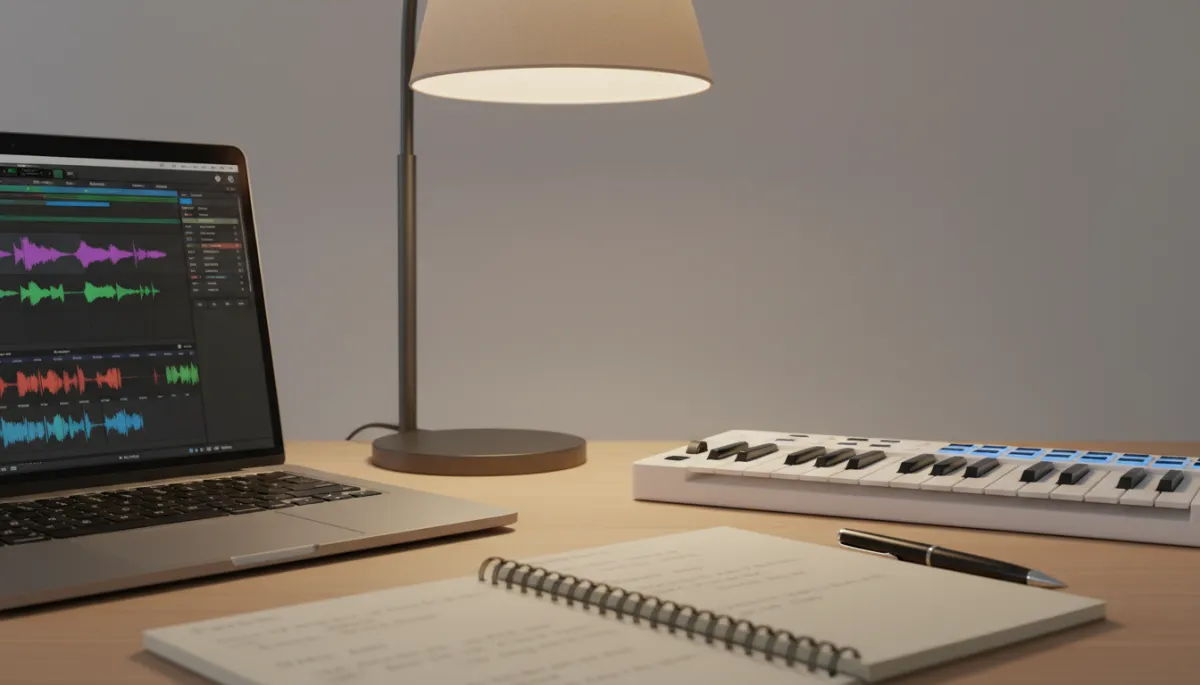
A clean, familiar setup makes it easier to focus on ideas instead of tools.
Best practices for a simple, effective setup
Limit your tools: Choose a few synths, a few effects, and a small set of go‑to samples. Learn them deeply before adding more.
Organise your files: Use clear folders for projects, samples, and exports so you can quickly find and revisit ideas.
Create templates: Save a DAW template with your usual tracks, instruments, and routing so you can start creating in seconds.
📌 Key Takeaway: Upgrade your skills and workflow first; upgrade your gear only when your current setup is clearly holding you back.
3. Finishing Songs Is a Skill (Not Just an Outcome)
One of the biggest shocks when I started making music was how easy it was to start ideas and how hard it was to finish them. I thought that if a track was “good enough,” it would somehow finish itself. In reality, finishing is its own separate skill set that you develop with practice, just like playing an instrument or mixing.
Learning to finish means accepting that not every song will be perfect. Some tracks exist just to teach you arrangement, mixing, or sound design. When you stop treating every idea as precious, you free yourself to move through the full process more often—and that is where real growth happens.
Best practices for actually finishing your music
Define “finished” in advance: For example, “arranged, mixed to a reasonable level, and exported,” not “flawless in every way.”
Use simple structures: Verse–chorus, intro–build–drop–outro—classic forms help you move forward instead of getting lost.
Set deadlines: Give yourself a few days or a week per track. When the time is up, bounce it and move on to the next one.
💡 Pro Tip: Keep a “finished but imperfect” playlist of your own songs. Listening back will show you how fast you are improving over time.
Bringing It All Together: Tips & Best Practices to Grow Faster
If you are just starting, or restarting, your music journey let these three lessons guide you: show up consistently, keep your setup simple, and practice finishing. Together, they form a powerful foundation that will save you years of frustration and second‑guessing.
Schedule regular, bite‑sized sessions instead of chasing inspiration.
Master a small set of tools and build a clean, reliable workflow around them.
Finish more songs, even if they are not perfect—the experience is the real reward.
You do not need flawless gear, endless time, or instant genius to make meaningful music. You just need a few honest principles, a bit of structure, and the willingness to keep going. Start where you are, with what you have, and let your next session be one step better than your last.